Chronic pain doesn’t have to be a choice between suffering and strong medication
Exploring your options starts with finding the source
(Aging Untold) — If you live with chronic pain, it can feel like you only have two choices: tough it out or take strong medication.
There are other ways to manage chronic pain that may help you sleep better, move better and get your life back. It starts with finding out why the pain is there.
Start with the source of the pain
The first thing to do is find the root cause or the source of the pain. That will determine how to treat it, Dr. Rhea Rogers, a board-certified physician, said.
She said the pain could come from a damaged muscle, damaged tissue, nerves or a nervous system that’s overly sensitive.
“Your treatment is going to depend on why you have the pain,” Rogers said.
She said the cause also leads to other options, such as movement and stretching.
Don’t overlook sleep
Rogers said sleep is something people often overlook.
“I know that pain a lot of times interferes with sleep. But if you get really good sleep, then it can actually help your pain, if you can get to that point,” Rogers said.
Experts share what worked for them
Aging expert Amy O’Rourke said she had chronic back pain around age 50 and kept returning to a chiropractor for adjustments.
She said he eventually told her she could keep coming back or stop doing some of the things that might be causing the pain. His tips included no longer wearing high heels, using an ergonomic cushion at work and no longer running.
“I think about what you shouldn’t do,” O’Rourke said. “I was so grateful that he told me what not to do to help my pain get better.”
O’Rourke also said she went to a physiatrist, whom she described as a sports medicine doctor, for a hip issue. She said walking up and down stairs made it worse, and she was taught to sleep on her side with a pillow between her legs.
“And I don’t have pain anymore,” O’Rourke said.
Gerontologist “Sam” Cradduck said she injured her lower back in her 20s and was told surgery was an option, but she declined. Another doctor told her to push her car seat up, she said.
Cradduck said other options for pain relief include acupuncture, dry needling, chiropractic care, cognitive behavior therapy and massage therapy.
She also described a transcutaneous electrical nerve stimulation unit, a machine used for muscle pain and to loosen muscles.
Rogers said several aesthetics places also have machines that do something similar.
“It increases blood flow, it helps mobility,” Rogers said. “People can move their arms and all that. And it helps a lot with the pain.”
As always, contact your health care provider for medical advice.
Inflammation, deconditioning and movement
Inflammation can make pain worse, Rogers said.
“Just look for the source of the inflammation that you have, because that’s what’s making it worse,” she said.
Aging well coach Katherine Ambrose said deconditioning can also play a role.
“Sometimes it’s just deconditioning, like we haven’t been working out like we should, and then we become weaker, then it is kind of a cascade of things,” Ambrose said.
Movement is important, Rogers said, because a lot of times people become stiff when they are not moving.
“When you’re moving, you have blood flow and everything is made a lot easier,” she said.
Physical therapy can help work the muscles around an injury to provide support while healing, O’Rourke said.
Medication and asking questions
Cradduck said people should not be so afraid of medications that they avoid it when needed.
She said she has seen 95-year-olds who have had hip replacements decline prescribed medication because they feared addiction.
How much pain is too much
The goal is not always to be 100% pain-free, Cradduck said.
“How much pain can I have and still live a normal life and not have it interfere with my life?” Cradduck said. “It’s when pain interferes with your daily living that you have to really be concerned.”
“I think sometimes we just accept pain as aging when that’s not the case,” Ambrose said.
Key takeaways
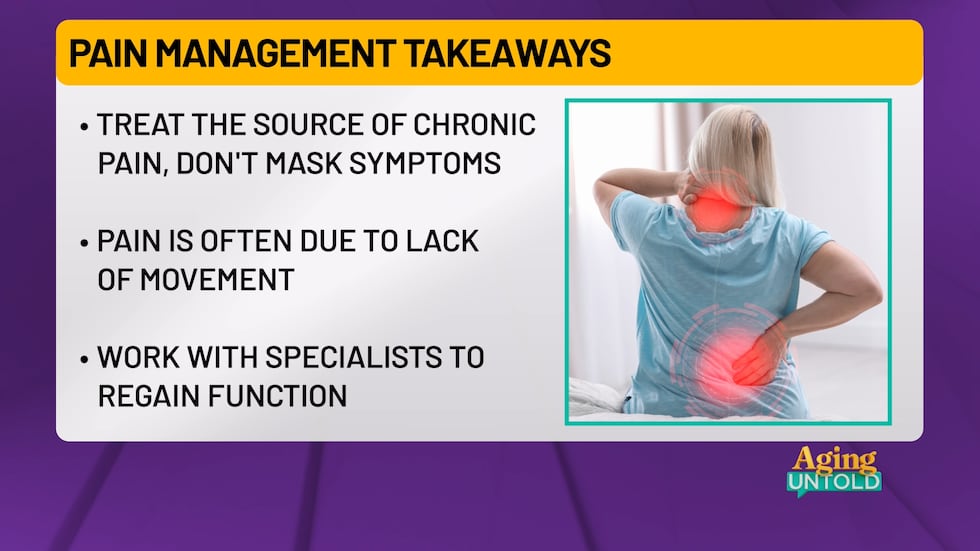
- Treat the source. Focus on treating the source of chronic pain, not just masking symptoms with medication.
- Know the cause. Pain can come from a damaged muscle, damaged tissue, nerves or an overly sensitive nervous system, and treatment depends on which it is.
- Keep moving. Many times pain results from deconditioning due to lack of movement. Movement increases blood flow.
- Work with specialists. A specialist such as a sports medicine doctor could help you regain function and treat the root cause of your pain.
This program is provided for educational and informational purposes only and does not constitute providing medical advice or professional services. The information provided should not be used for diagnosing or treating a health problem or disease, and those seeking personal medical advice should consult with a licensed physician. Always seek the advice of your doctor or other qualified health provider regarding a medical condition. Never disregard professional medical advice or delay in seeking it because of something you have seen on this program. If you think you may have a medical emergency, call 911 or go to the nearest emergency room immediately. No physician-patient relationship is created by this program or its use. Aging Untold/Gray Media, nor its employees, contractors or agents, nor any contributor to this program, makes any representations, express or implied, with respect to the information provided herein or to its use.
Copyright 2026 Gray Media Group, Inc. All Rights Reserved.