Chasing a Ghost: Chapter Three - The Case They Wouldn’t Let Go
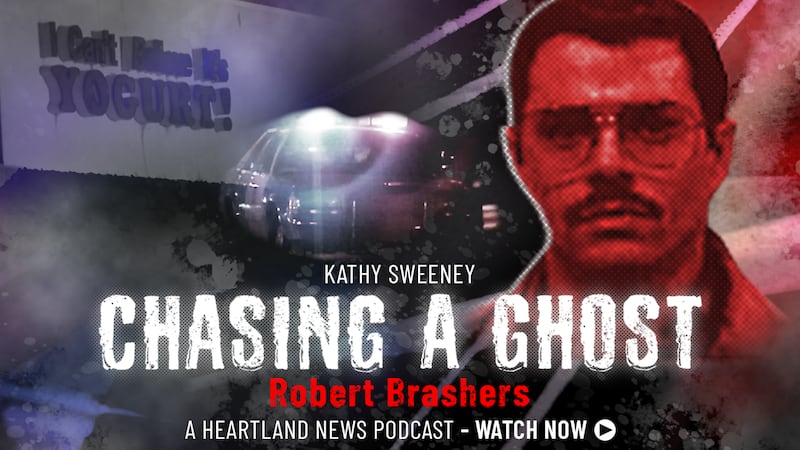
CAPE GIRARDEAU, Mo. (KFVS) - In Chapter Three of Chasing a Ghost, Kathy Sweeney traces the relentless, decades-long investigation into the 1998 murders of Sherri and Megan Scherer in southeast Missouri.
It was an effort that never went cold, even as leads dried up.
Through interviews with investigators and a look at key breakthroughs, the episode follows the trail from Missouri to Tennessee, Kentucky, Arkansas, and South Carolina, revealing how advances in DNA testing and a crucial CODIS hit began connecting crimes across state lines—and set the stage for the eventual identification of a long-hidden serial killer.
The following is a transcript of the third installment of “Chasing a Ghost” an 11-part series from Heartland News Anchor and Investigative Reporter Kathy Sweeney.
Content warning
This episode contains references to murder, sexual assault, and suicide, and includes descriptions of crime scenes that may be disturbing for some listeners. Please listen with care.
Terry Stevens: “They went everywhere. Everywhere. And I never questioned that. You can’t just solve a crime sitting at your desk and hoping that things present itself. You’ve got to get out and go find the evidence. And that’s what we did.”
Kathy Sweeney: Investigators in southeast Missouri searched near and far for their suspect following the 1998 murders of Sherri and Megan Scherer—stopping at no expense to find their killer.
But after so many years, cases can go cold. Leads dry up. Tips stop coming in. And when the DNA doesn’t match, it just doesn’t match. You move on to the next case.
Unless it’s this case.
No one moved on from the Scherer case, put it on a shelf, or allowed it to go cold. And because of that, investigators would uncover huge leads over two decades that would ultimately drag a serial killer out of his grave and into the spotlight.
Kathy Sweeney: On paper, authorities in New Madrid County, Missouri had a physical description of the man who shot and killed a mother and daughter in March of 1998.
They came from the woman he shot in Dyersburg, Tennessee just a few hours after the murders.
A white male. 30 to 50 years old. Small build. Straight, medium-length graying hair. Graying mustache. Possibly driving a maroon van.
But the officers, deputies, and troopers who spent time inside the home of Sherri and Megan Scherer that night knew more than that.
They were looking for a monster.
Note: A short section is omitted in the source script.
Don Windham: “It was obvious the target of this was Megan, the young girl. Not only was she assaulted and shot and… just horribly… she was posed like he wanted to show what he had done.”
Kathy Sweeney: The Patrol took the lead on the Scherer case, and Sergeant Bud Cooper ran the show.
Sgt. Bud Cooper: “We want to solve it. It’s been tough on this whole community, the county, the family. I mean, it’s one we really need to get solved.”
Kathy Sweeney: Cooper speculated that their suspect—who tried to talk his way into a Dyersburg, Tennessee home shortly after killing Sherri and Megan—must have done the same thing outside their home in Portageville, Missouri.
Sgt. Bud Cooper: “Certainly, you would think that there were similarities. He’s using some type of ruse to talk to Sherri and Megan. Or they’re separated and he pulls the gun on one or the other.”
Kathy Sweeney: Working the Scherer case alongside Cooper was New Madrid County Sheriff’s Deputy Chris Hensley.
Chris Hensley: “Anybody that had a question about this case or if there was a lead that was called in, it was always ran by Bud.”
Kathy Sweeney: Hensley, Cooper, and the team got a host of new leads after the Scherer case was featured on America’s Most Wanted two months after the murders.
Chris Hensley: “People would call in and they said that they seen the guy at that matched the composite at an intersection in Pueblo, Colorado. And he was drinking a beer, driving a green Lincoln. And I mean, we would go through and make sure there wasn’t a green Lincoln linked to a murder, something out there.”
Kathy Sweeney: And based on what had happened inside the Scherer home—and the fact that their killer attacked a second family just hours later—the southeast Missouri team felt strongly they were looking for a suspect who had killed before.
I recently spoke to retired patrol investigator Don Windham by phone about their suspicions.
Don Windham: “You know, you just know as an investigator when you’re working on these cases and you get to digging into that. If it’s not somebody right there local that knew her. It’s more than likely a good chance or good possibility that it’s going to be a serial killer.”
Kathy Sweeney: And they were right. But the serial killer they were searching for was starting to make some surprising mistakes. And in less than a year, they would lead to his undoing.
Kathy Sweeney: As serial killers go, Robert Brashers must have thought he was good at what he did.
By the spring of 1998, Brashers had female victims stretching from Texas to Missouri, over to Tennessee, and down to South Carolina.
And yet he was not on anyone’s suspect list.
He was a ghost—drifting in and out of communities—stealing lives—then disappearing.
But as a regular criminal, Brashers was pushing his luck.
He’d been arrested twice in 1998—both times in Greene County, Arkansas where he was living with his family.
In April, he drunkenly tried to break into his neighbor’s house in Paragould with a loaded .22 and a video camera. He had already cut her phone line. But even with an attempted murder conviction out of Florida on his record, he did not seem dangerous enough to keep behind bars. The judge set his bond at $5,000 and he paid it.
In August, Robert Brashers was arrested again after a bizarre hit-and-run case in Greene County.
The only details I can find about it come from an article in the local Paragould newspaper. I’ll try to keep it simple.
Basically, he crashed a van into a fence and hit a parked vehicle at a nearby flea market. He got hurt, and when police caught up with him, he gave a false name and lied about what happened.
When officers finally figured out who he was and how he really got hurt, they also learned Brashers had broken into a neighbor’s house and stolen some cash and jewelry.
That arrest caused Brashers’ bond in the April case to be revoked. In October 1998, authorities in Arkansas issued a state warrant for his arrest.
If he was worried about his freedom, though, Robert Brashers didn’t show it. Instead, he hit the road.
Brashers had decided it was time to go on the hunt for another victim—in a new state.
Det. John Davis: “So, November 7, 1998 basically started out like any other morning here in Lexington on 121 Malibu Drive at the Nixon Hearing Aid Center.”
Kathy Sweeney: That’s the voice of Lexington, Kentucky Detective John Davis.
On that Saturday morning around 7:40, a 911 call brought Lexington firefighters to the hearing aid business on Malibu Drive.
Det. John Davis: “They were able to put out that fire, and then during the course of extinguishing that fire, they located a deceased female inside of the building.”
Kathy Sweeney: The female victim was later identified as 43-year-old Linda Rutledge.
Rutledge’s parents owned the Nixon Hearing Aid Center and she worked there. Police believe she was killed sometime Friday evening.
Det. John Davis: “Linda’s body was taken for autopsy; they found that she had sustained two gunshot wounds to the head and also had some internal injuries consistent with some blunt force trauma.”
Kathy Sweeney: Despite the damage done by the fire, Detective Davis said the original investigators were able to collect quite a bit of evidence from the scene.
Det. John Davis: “There were door frames, door handles, fire debris. There was a whole bunch of stuff that was taken, but the most important items that they were able to recover—one of those was a single .380 spent shell casing. There was also two projectiles that they recovered, and then there was a sexual assault kit that they performed on Linda during the time of her autopsy.”
Kathy Sweeney: Two days after Linda’s murder, a second Arkansas warrant was issued for Robert Brashers’ arrest.
Five days after Linda’s murder, Brashers missed a Greene County court date, triggering a third arrest warrant.
He now had eight known victims—women and young girls—in four different states.
But no one was looking for Robert Brashers the serial killer.
They were looking for Robert Brashers, the career criminal who skipped a court date.
Kathy Sweeney: Southeast Missouri investigators searching for a suspect in the murders of Sherri and Megan Scherer felt strongly they could be dealing with a transient criminal—possibly even a serial killer.
So, when prolific murderer Tommy Lynn Sells suggested he may have killed the mother and daughter, a team of investigators made the trip to Texas to talk to him.
In that group was Highway Patrol Sergeant Jeff Heath.
Jeff Heath: “I recall Tommy being a serial killer, cold-blooded killer. He’d done a lot of things across the country. In my mind, he was trying to take credit for everything he could.”
Kathy Sweeney: Former New Madrid County Deputy Chris Hensley also made that trip.
Chris Hensley: “While we were interviewing him, he asked us if the kitchen would have had watermelon decor. We had to go outside and we had all our evidence photos. And we looked through there and lo and behold, the kitchen is done in watermelon decor. And that really made us believe, at the time.”
Kathy Sweeney: Did you ever find out how he knew that? Just a good guess?
Chris Hensley: “Just a good guess is that.”
Kathy Sweeney: Was he cleared by DNA?
Chris Hensley: “Yes.”
Kathy Sweeney: That trip to Texas was one of many taken during the Scherer investigation.
Former New Madrid County Sheriff Terry Stevens told me county leadership always supported the money Stevens and his department spent on travel tied to the case.
Terry Stevens: “Every now and again, I’d get a question about why are you spending this much money? … But what price do you put on solving a crime? A homicide? A double homicide?”
Kathy Sweeney: Retired Highway Patrol Captain Phil Gregory joined many of those road trips.
Phil Gregory: “I personally probably have been in eight or 10 different states, I would think, and the entire investigation, it would be difficult to put a number on, but I’m guessing 20-ish, something like that.”
Kathy Sweeney: And as those investigators traveled from state to state looking for him, Robert Brashers was starting to feel the walls closing in.
Not because anyone was close to catching him.
Because he was making too many mistakes.
Brashers had left behind five living victims in Tennessee—four in Memphis at the scene of a violent 1997 sexual assault, and one in Dyersburg during that failed home invasion right after he killed the Scherers.
By late 1998, he had numerous warrants out for his arrest, including a federal warrant—because the April case in Paragould involved a weapons charge.
And when Paragould police arrested him, they took his .22 caliber revolver.
The same make and model of weapon he used to kill Sherri and Megan.
Former New Madrid County Captain Chris Hensley told me Paragould Police had no idea what they had just collected.
Chris Hensley: “And, you know, those officers at the time, they didn’t know the details of the Scherer homicide. And we weren’t releasing the caliber of weapon.”
Kathy Sweeney: But Robert Brashers would have known Paragould Police had a key piece of evidence that could be used against him in a double murder case.
So, after Linda Rutledge’s murder in Kentucky, Robert Brashers never really went back home.
His daughter Deborah remembered him being gone for weeks at a time.
When I talked to Deborah back in 2019, she described her mother trying to hide her father when they did see him.
Deborah Brashers: “We would go pick him up. And my mom would make a game out of it. And we’d carry a rug. We’d buy a new rug every time we picked him up. And carry a rug in to where you couldn’t see around him.”
Kathy Sweeney: Brashers also made a very telling decision in late fall 1998.
He chose to write a suicide note.
Based on its contents, the note was written sometime after November 22. That’s when Deborah told me her grandfather, Doulis Brashers, got out of the hospital after receiving treatment for cancer.
Robert Brashers mentioned his father’s hospital stay in the short note.
He then folded that note—wrote the words “To Police” three times on the front—and stuck it in his shirt pocket.
Kathy Sweeney: Trying to find a killer with no real connection to their victims is not an easy task.
Retired Highway Patrol Captain Phil Gregory remembered working on the Sherri and Megan Scherer case—exhausting all possible local leads—while feeling strongly they were searching for a transient serial killer.
Phil Gregory: “It’s highs and lows. You think you’re on the right track. And at least for the first few instances, you learn after a few of those to not get very excited about things. I often refer to myself as expecting the worst and hoping for the best when it comes to that kind of thing.”
Kathy Sweeney: Did you ever feel like you were close or that you found someone really good and then it turned out?
Phil Gregory: “Absolutely. You know, I refer to that as us trying to fit square pegs in round holes. There was a lot of that.”
Kathy Sweeney: But those pegs would begin to change shape—beginning in the summer of 2004.
That’s when Patrol Sergeant Jeff Heath had some downtime after knee surgery.
Jeff Heath: “And so, for me, it was just the right time to… we talked about going back to the evidence, looking to see what could be tested because of the advances in DNA. So looked at every piece of evidence we had and picked out what we thought would have possible DNA on it, like the bindings, the gag, the swabs, anything.”
Kathy Sweeney: That included the possible saliva swab taken by investigator Don Windham at Megan Scherer’s 1998 autopsy.
Windham remembered not knowing if he’d collected anything that day.
Don Windham: “I was trying everything at the same… everything that I could think of, even things that I had just read up that weren’t readily… people weren’t readily doing yet.”
Kathy Sweeney: Jeff Heath packed up the evidence and took it to the Missouri State Highway Patrol Crime Lab in Jefferson City, where he needed to convince forensic scientists to retest it.
Kathy Sweeney: And how did that conversation go?
Jeff Heath: “Well, eventually it went well. You know, they’d already tested it. But I got Ruth Montgomery on my side fairly quickly, and she was able to help me maneuver through the other people to get tested. But ultimately, Ruth is the one that tested the… she was a DNA person, and she was the one that tested the ultimate swab that come up with the DNA sample.”
Kathy Sweeney: The ultimate swab—Don Windham’s swab.
The one he took at Megan Scherer’s autopsy, hoping to collect traces of saliva.
And he did.
Now, thanks to Don Windham’s instincts and Jeff Heath’s convincing, Missouri investigators had a suspect DNA profile.
It was entered into the FBI’s Combined DNA Index System—CODIS—in March 2006.
Just one month later, southeast Missouri investigators learned they had a match.
It would take them back eight years—to a crime in South Carolina that was nothing like what happened to Sherri and Megan.
Phil Gregory: “Early in the investigation, we were looking for sexual assaults and murders of children. We thought it would be a younger female victim and then enter Jenny.”
Kathy Sweeney: Genny was 28-year-old Genevieve Zitricki—now the first known victim of Sherri and Megan’s killer.
Zitricki was beaten and strangled to death on April 6, 1990, by an unknown male suspect who broke into her apartment in Greenville, South Carolina.
Former Sheriff’s Deputy Chris Hensley remembered how surprised they were when they learned the details of the Zitricki murder.
Chris Hensley: “It was odd. We… you know, we… the only way we could explain it was that Jenny was one of his first victims. Because of the overkill.”
Kathy Sweeney: Back in 2017, Hensley helped walk us through a reenactment of the crime as part of a special report on the Scherer case.
The portion you’re about to hear picks up after we learn Genny was attacked while she slept, beaten with some kind of blunt object, and strangled with a pair of her own pantyhose.
Kathy Sweeney: She never woke up.
Chris Hensley: “No.”
Kathy Sweeney: Was she sexually assaulted?
Chris Hensley: “Yes.”
Kathy Sweeney: He drags Jenny’s lifeless body into the bathroom. He puts her in the bathtub and turns on the faucet.
He then goes back into her bedroom and turns it upside down.
Chris Hensley: “All the drawers had been opened. There were clothes all over the floor. And then there was the mirror above the dresser. The suspect took a magic marker and wrote a message on the mirror.”
Kathy Sweeney: It said, “don’t [expletive] with my family.”
Did that tell you anything at the time?
Chris Hensley: “I think at the time those investigators were looking for someone who had some type of argument with Jenny Zitricki. Speaking with the profilers in this case, they believed it was just a false message—something to throw law enforcement off.”
Kathy Sweeney: They didn’t think it was a random attack.
So, maybe he knew her?
Chris Hensley: “Yes. Some type of… whether he followed her home from a bar and what little type of a relationship they had, who knows?”
Kathy Sweeney: It was a staged crime scene.
Chris Hensley: “Yes.”
Kathy Sweeney: Captain Hensley admits this isn’t the kind of lead they expected.
Chris Hensley: “We had the FBI profilers that were coming in and looking at our case and looking at their case and explained to us the differences—which is the Greenville homicide was probably one of his first. And the Portageville double homicide, he had educated himself and sharpened some of his skills.”
Kathy Sweeney: We don’t know for sure if Genevieve Zitricki’s murder in 1990 was Robert Brashers’ first.
But we now know that Austin, Texas authorities have evidence putting Robert Brashers at the scene of the Yogurt Shop murders just a year and a half later.
And we know Brashers committed three murders in 1998—Sherri and Megan Scherer in March and Linda Rutledge in November.
As the calendar turned to 1999, Robert Brashers made one last series of mistakes that brought his monstrous life to a sudden, shocking end.
Sometime around the first or second week of January, Brashers went back to Paragould, Arkansas, packed up his family, and drove them to Kennett, Missouri.
Kennett is in southeast Missouri—about 40 miles southwest of Portageville, where he killed Sherri and Megan Scherer.
They arrived at the Super Eight Motel in a beat-up Dodge with a busted window, a broken trunk lock, and stolen Indiana license plates.
On the evening of January 12, 1999, those stolen plates brought police to his door.
Chief Kenny Wilson: “I think basically he was just passing through for the evening, and we just got lucky is what happened.”
Kathy Sweeney: That’s the voice of Kennett, Missouri Police Chief Kenny Wilson.
Wilson says his fellow officers got lucky in January 1999—the night they stumbled upon a wanted man from Arkansas hiding out in one of their motels.
It was 11:30 p.m. on January 12th.
Wilson was a Kennett patrolman at the time. He was not on duty that night, but he’s heard the story many times and knows it well.
Chief Kenny Wilson: “Basically, they just got bored that night, went around running a license number at the hotels, which led to a hit on the stolen license plate.”
Kathy Sweeney: The clerk at the Super Eight told the officers the vehicle with the stolen plates belonged to a man named Thomas Mitchell in room 323.
They knocked on the door.
According to the Kennett Police report, a woman later identified as Rose Fultz answered the door and appeared to be drunk. Her three daughters were in the room with her.
She told officers the car was hers and Thomas Mitchell was gone. She agreed to let them search the room.
One of the officers noticed someone hiding under one of the beds. At the same time, Fultz is described as becoming very loud and combative. They put her into handcuffs.
After several minutes, one of the officers pulled the mattress away to reveal the suspect—who had a small, semi-automatic pistol pointed at his head.
The officers ordered him to drop his weapon. But he refused.
More officers arrived.
He told them to leave so he could call his attorney. The officers left and the suspect locked the door behind them.
One of the Kennett officers established contact with the suspect by phone.
He started throwing things out of the room: clothing belonging to the woman and the three children. A nine-millimeter pistol with a loaded magazine. A handful of .380 caliber bullets.
And soon officers learned who they were dealing with.
At the Kennett Police Station, Rose Fultz told them the man’s real name was Robert Eugene Brashers.
A quick check revealed Brashers’ outstanding Arkansas warrants.
But current Kennett Police Chief Kenny Wilson thinks Brashers’ actions that night showed he was worried about more than just getting arrested.
Chief Kenny Wilson: “Obviously, he probably thought they were there for other reasons. He knew what he had done in the past and thought maybe the officers knew.”
Kathy Sweeney: Whatever he was thinking, Robert Eugene Brashers would spend the last four and a half hours of his life in that Kennett motel room.
It was just him and his AMT Backup Model .380 pistol—the same gun he was found carrying just two days after the 1991 Yogurt Shop murders.
The same make and model he used to shoot 13-year-old Amy Ayers in Austin, Texas—and 43-year-old Linda Rutledge in Lexington, Kentucky just two months earlier.
Kennett officers had no idea they had caged a killer who must have finally decided he had no way out.
At approximately 4:34 a.m. on Wednesday, January 13, 1999, a single shot was heard coming from inside room 323 at Kennett’s Super Eight Motel.
Six members of law enforcement entered the room with a pass key and found Robert Brashers on his back with that .380 pistol in his right hand.
He had a gunshot wound to the right side of his head at the temple area that exited on the left side.
One of the officers pulled a suicide note from his right front pocket.
It read:
“In the event of you reading this I am dead. Please I beg you contact Rose Fultz at an address in Paragould, Arkansas. Do Not contact my father… Has just came out of the hospital from cancer surgery and it will kill him if the cops tell him. Thank you!”
Robert Brashers was rushed by ambulance to a local hospital where he was later pronounced dead.
By some accounts, he lived six more days on machines.
Either way—he was gone.
Chief Kenny Wilson: “You never know what’s going through somebody’s mind when they go through something like that. And obviously, he had a past that he knew about and wanted to keep hidden, I guess. And the officers had no idea at the time.”
Kathy Sweeney: But current Kennett Police Chief Kenny Wilson does remember them all talking about how unusual the whole incident seemed—even when they learned who Robert Brashers was and what his criminal record showed at the time.
Chief Kenny Wilson: “Yes, it’s pretty extreme for him to go to those measures just over a stolen license plate.”
Kathy Sweeney: According to the Kennett Police report, the chief at the time, Joe Brumley, took possession of the .380.
A Kennett captain handled the 9 mm.
Police also collected $2,600 in cash found in Brashers’ hotel room.
The actions of the Kennett Police Department following the suicide of Robert Brashers would be put under the microscope decades later—after Brashers was finally identified as a serial killer.
But in January 1999, it was simply a weird case involving a 40-year-old criminal who took that extreme way out.
Brashers’ family buried him back in Paragould, Arkansas, and law enforcement forgot about him.
Sgt. Bud Cooper: “It certainly told us we had someone who was traveling. In my mind, it certainly told us we had a serial killer.”
Kathy Sweeney: The 2006 DNA link established between the murders of Sherri and Megan Scherer in Missouri and Genevieve Zitricki in South Carolina gave investigators in both states a new perspective on their suspect.
Highway Patrol Master Sergeant Jeff Heath remembered heading down to South Carolina shortly after the match was made.
Jeff Heath: “It gave us some more leads, more direction. Obviously, it reinforced what we believe to be true, that this wasn’t a one-time thing. Well, we knew it wasn’t a one-time thing because we went from Portageville to Dyersburg.”
Kathy Sweeney: Retired Patrol Captain Phil Gregory also pointed to the differences in how the murders were carried out.
Phil Gregory: “The blitz attack on Jenny looked completely different than what we’d seen. So, it kind of made you pause and take a step back and rethink where you’d been going.”
Kathy Sweeney: FBI profilers also stressed the killer would have some kind of connection to both Missouri and South Carolina.
Sergeant Cooper explained it this way.
Sgt. Bud Cooper: “The most important thing they told us is you’re going to find something that links your killer to South Carolina in 1990 and Portageville in 1998. And not necessarily that he lives here or that he works here. Could have friends here. Something took him to South Carolina in ’90 and brought him here in ’98.”
Kathy Sweeney: Could be friends, family, work. It’s something.
Sgt. Bud Cooper: “Something.”
Kathy Sweeney: So, now you’re looking for that something.
Sgt. Bud Cooper: “That’s right.”
Kathy Sweeney: To find that something, the multi-state team decided to look very deliberately for someone with ties to both areas.
Using a geographic mapping system, they created a list of people who lived within 100 miles of the South Carolina crime scene in 1990 and also lived within 100 miles of the Portageville and Dyersburg crime scenes in 1998.
That system spit out a list of more than 300 names.
Here’s New Madrid County Sheriff Terry Stevens reacting to that list when they first got it back in 2008.
Sheriff Terry Stevens: “Initially, I was amazed there would be that great a number of people that actually had ties to both locations during these two time periods.”
Kathy Sweeney: As investigators worked through that list of 300 names, America’s Most Wanted featured the Scherer and Zitricki cases together in 2009.
Phil Gregory remembered getting some really encouraging leads from that broadcast.
Phil Gregory: “I can think of two different instances that children called America’s Most Wanted tip line and said, ‘it’s my dad. I know it is,’ crying, upset. And you think, oh my gosh—for a child to call and report their father, this has got to be a good lead. And then it just fizzles out, so to speak.”
Kathy Sweeney: Those leads would continue to come in and fizzle out for the next several years.
A check of the Scherer case file shows investigators continued tracking down possible suspects off that list of 300 names—both alive and dead.
I asked Chris Hensley if he and Bud Cooper ever lost hope.
Kathy Sweeney: At any point during the investigation, was there ever a time where you and Bud were like, we’re just not going to find this guy?
Chris Hensley: “No. We knew we were going to find him. Bud’s drive was not going to… was not going to say that. He was too driven. And if that kept me going, we knew we were going to catch him.”
Kathy Sweeney: Just a matter of time.
Chris Hensley: “Yep.”
Kathy Sweeney: And then in 2017, a big-city police department decided to finally test a rape kit that had been sitting on a shelf since 1997—a full year before Sherri and Megan were murdered.
It’s a decision that would bring the next big break in the Scherer and Zitricki cases and reveal a link to a violent sexual assault with living victims.
Here’s how Highway Patrol Sergeant Bud Cooper described the new lead—and its significance.
Sgt. Bud Cooper: “It was a 1997 rape out of Memphis, Tennessee. And we were able to, through their reports, figure out what was said. How he acted. What he did. The guy talked his way in, used a ruse, to get his foot into the door of the house.”
Kathy Sweeney: The Memphis link also helped bring the 20-year Scherer investigation to a stunning close when a pioneering expert in genetic genealogy finally unearthed a serial killer.
CeCe Moore: “He was here in Greenville. He was here. He’s there. He’s a violent criminal. He looks… I even put in my report those sketches compared to the Facebook picture and said, ‘look, it’s the same hat. It’s the same glasses.’”
Kathy Sweeney: That’s on the next chapter of Chasing a Ghost: A Monster Revealed.
Copyright 2026 KFVS. All rights reserved.